

Short-Term Training/ Observerships
Short-duration learning opportunities for clinicians seeking practical exposure, academic engagement, and insight into AJICO’s service-driven training environment.
Programme Overview
About Short-Term Training/ Observerships
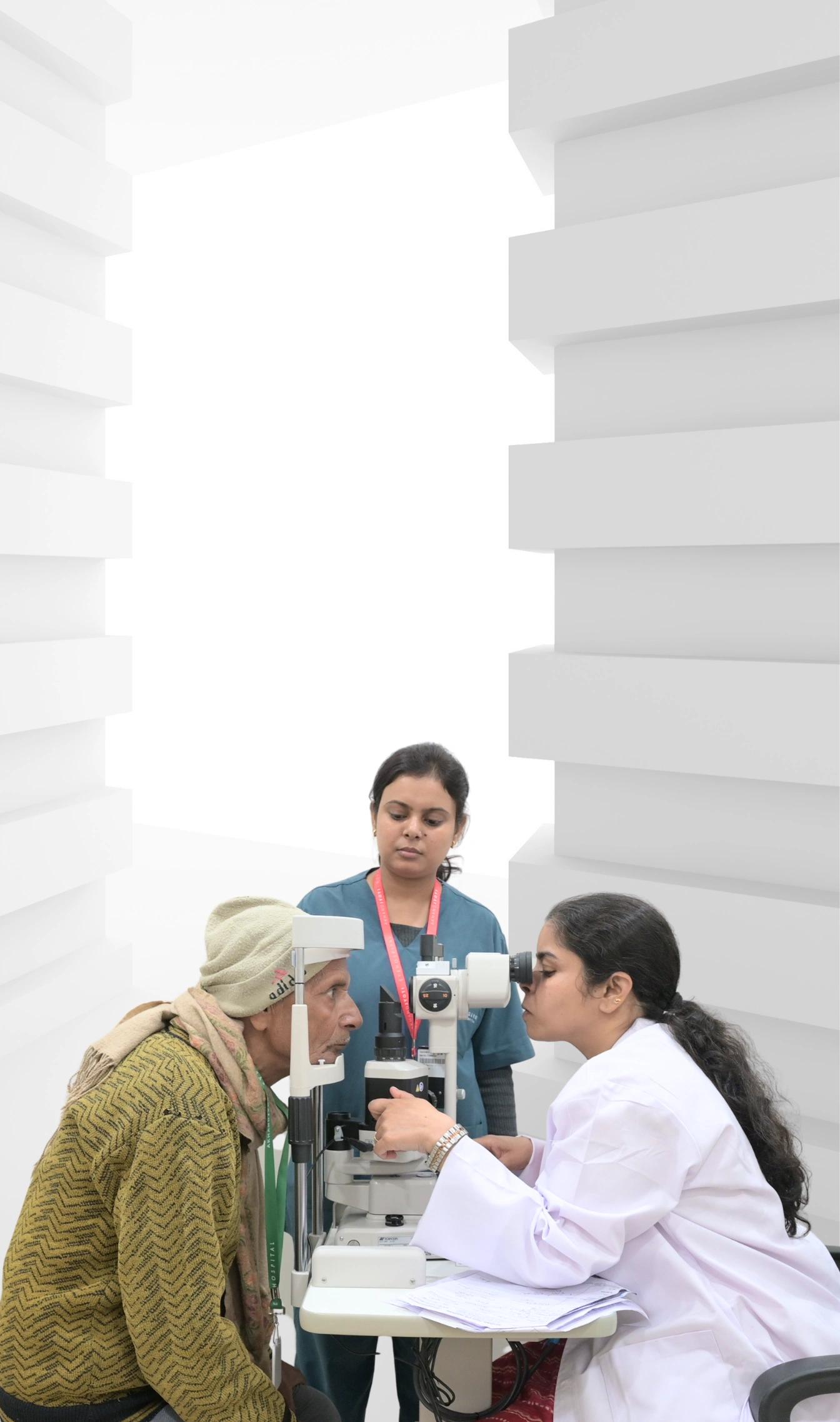
Short-Term Training and Observerships at AJICO are designed for clinicians and eye care professionals who wish to gain focused exposure to clinical practice, academic learning, and service delivery systems within a limited timeframe. These programmes provide opportunities to observe experienced faculty, engage with real patient care pathways, and understand how high-quality eye care is delivered across hospitals, outreach programmes, and community settings. Whether for skill enhancement, professional development, or institutional learning, these pathways offer meaningful insight into AJICO’s practice-grounded approach to eye health.
What You Can Expect from This Experience
This programme is designed to provide participants with:
- meaningful exposure to real-world clinical practice and patient care pathways
- opportunities to observe experienced faculty and institutional workflows
- insights into high-volume eye care delivery and community outreach systems
- a deeper understanding of clinical decision-making and service delivery models
- engagement with AJICO's academic culture through discussions, rounds, and learning sessions
- exposure to the operational and organisational aspects of a leading eye care institution
- a broader perspective on community ophthalmology and eye health in underserved geographies
Learning Through Exposure
Observerships and short-term training programmes provide a unique opportunity to step inside a living eye care ecosystem. Participants gain insight into clinical practice, academic culture, patient care pathways, and institutional systems while observing how high-quality eye care is delivered at scale.
Fellowship Areas
What You Will Cover
Curriculum
- Foundations (Corneal anatomy, physiology, and pathology | Slit-lamp examination techniques | Comprehensive anterior segment evaluation | Corneal imaging and diagnostic investigations)
- Clinical Cornea (Infectious keratitis and corneal ulcers | Ocular surface disorders and dry eye disease | Corneal dystrophies and degenerations | Clinical case discussions)
- Diagnostic Technologies (Corneal topography | Pachymetry | Specular microscopy | Interpretation of imaging findings)
- Surgical Observership (Observation of keratoplasty procedures | Corneal cross-linking | Ocular surface reconstruction | Operation theatre protocols)
- Advanced Clinical Exposure (Management of complex corneal conditions | Postoperative care | Multidisciplinary discussions | Faculty-led grand rounds)
- Integration & Academic Learning (Journal clubs | Case presentations | Clinical audits | Research orientation | Programme assessment and feedback)
- Foundations (Retinal anatomy and clinical examination | Indirect ophthalmoscopy | Fundus evaluation techniques | Retinal imaging principles)
- Medical Retina (Diabetic retinopathy | Retinal vascular disorders | Macular diseases | Inflammatory retinal conditions)
- Diagnostic Retina (OCT interpretation | Fundus photography | Fluorescein angiography | Clinical imaging workshops)
- Surgical Observership (Observation of vitreoretinal procedures | Intravitreal injections | Retinal laser procedures | Surgical planning discussions)
- Complex Retina (Retinal detachments | Vitreous disorders | Ocular trauma | Emergency retina case discussions)
- Academic Integration (Journal clubs | Grand rounds | Clinical case presentations | Research methodology | Programme review and assessment)
Throughout the programme, participants will also engage in:
- Outpatient clinic observation
- Faculty-led case discussions
- Grand rounds
- Journal clubs
- Operation theatre observation
- Diagnostic imaging interpretation
- Community ophthalmology exposure
- Clinical audit sessions
- Research orientation
- Professional ethics and patient communication
- Certificate of completion upon successful participation
Who Should Apply
Eligibility & Selection
Eligibility Criteria
- 1MBBS degree from an NMC-recognised medical institution.
- 2MS/ DNB in Ophthalmology, or currently enrolled in a recognised postgraduate ophthalmology programme.
- 3Valid registration with the National Medical Commission (NMC) or State Medical Council (where applicable).
- 4Demonstrated interest in gaining focused clinical exposure in the chosen subspecialty.
- 5Willingness to participate in outpatient clinics, operation theatre observerships, academic sessions, and case discussions throughout the programme.
How to Apply
- 1Applications are reviewed based on academic qualifications, current professional status, statement of purpose, and the availability of training slots within the selected subspecialty.
- 2Shortlisted applicants may be invited for an online or in-person interaction before admission is confirmed.
Download the Prospectus
The AJICO prospectus covers all programmes, admission requirements, stipend structures, campus facilities, and the application process in detail. Download or request a copy to be sent to you.
AJICO Prospectus 2026–27
Includes all 8 programmes, faculty profiles, eligibility criteria, stipend details, campus overview, and application timeline.
PDF · Updated April 2026